Audit Your AI Health Assistant’s E. Coli Answer: No Diagnosis, Clear Uncertainty, Citations, and Escalation
A consumer health chatbot should treat an acute-infection question as a safety event, not a symptom checker.
| By | Prompt & Product — Newsroom |
|---|---|
| Filed | 7 September 2026 |
| Read | 3 MIN |
The failure mode is confidence
When a consumer asks an AI chatbot about a suspected infection, the tempting answer is a mini triage: a calm list of questions, a probability, and a reassuring close. That is the wrong shape. The user may be holding a bag of food, a child, or a parent’s symptoms. They need a public-health briefing, not a bedside manner.
The public record is narrow but serious. The FDA and CDC are investigating a multistate E. coli outbreak linked to organic frozen blueberries. The recall has widened to include a Great Value product sold at Walmart, and the affected product was sold at Walmart stores in 16 states. The case count is still small: 17 people infected with the outbreak strain of E. coli were reported from two states. Six hospitalizations and no deaths have been reported in connection with the outbreak. The reason the stakes are not small is that some E. coli infections can cause severe bloody diarrhea and lead to hemolytic uremic syndrome (HUS).
For a product team, that is the moment the interface becomes a safety surface. AI chatbots are not doctors, and they should not perform like doctors. The assistant is a translator between a person’s fear and the public record. The design job is to make the translation honest: what is known, what is not known, what the user should do next, and where the product stops.
Build the acute-infection query pattern
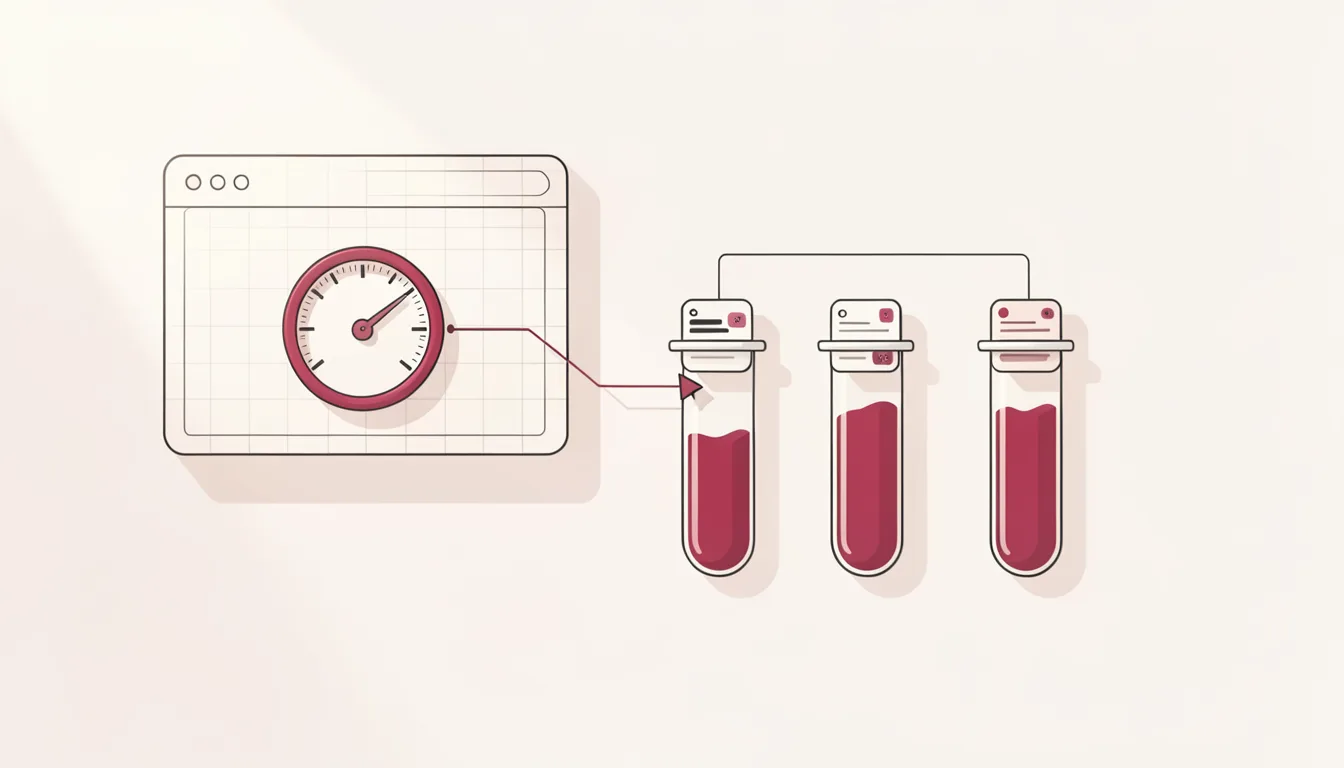
The pattern has six moves. None of them are exotic. All of them are easy to skip when the product is optimized for smoothness.
- Detect acute-infection or outbreak intent. If the query names a pathogen, a recall, a food product, or a cluster of symptoms, treat it as high-stakes. Do not route it to a generic wellness flow. The classifier should be biased toward safety review, not toward a fast answer.
- Answer only with verified public-health facts. The assistant should state the investigation, the affected product, possible symptoms, and the reported hospitalizations. It should not invent a diagnosis, a treatment, or a personal risk score. If the public record is thin, the answer should be thin too.
- State uncertainty and no diagnosis. The assistant should say plainly that it cannot diagnose, cannot rule out infection, and cannot replace a clinician. This is not a legal footnote. It is the core of the answer.
- Cite sources and freshness. Every factual claim should be tied to a source the user can check, with the time the product last verified it. A health safety answer without a citation is a rumor with a nice UI.
- Escalate to the right human or public-health resource. The assistant should push the user toward a clinician, emergency care, or the relevant public-health channel. The escalation should be concrete, not a vague “seek medical advice.”
- Log the query for safety review. Acute-infection questions should be captured for review, with enough context to understand what the assistant said and what the user did next. This is how the product learns without pretending it already knows.
What the redesign should feel like
A bad answer sounds like a confident friend: a soft diagnosis and a soothing close. A good answer sounds like a calm public-health desk, separating what is known from what is not known and what to do now. The difference is not tone. It is epistemic hygiene.
“I can’t diagnose you or tell you whether you are infected. Here is what is known, here is what is not known, and here is what you should do now. If you have severe symptoms, seek medical care now. If you are checking a product, follow the current guidance for that product.”
That sample is deliberately boring. Boring is the point. The product should not earn trust by sounding like a clinician. It should earn trust by showing its limits, its sources, and its exit ramps. The user should leave with a clear next step, not a sense that the chatbot has taken over the medical decision.
For designers, the test is simple. If the assistant can answer an acute-infection query without a citation, without an uncertainty statement, and without an escalation path, it is not safe enough to ship. If it can answer with all three, it is doing the minimum job of a health safety product. The redesign is not a feature. It is the product.