Voice input trust: raw or polished, settled transcript
A trustworthy voice input makes the transcription contract explicit: choose verbatim or smart, separate interim guesses from final text, and say when the transcript becomes authoritative.
| By | Prompt & Product — Newsroom |
|---|---|
| Filed | 17 September 2026 |
| Read | 3 MIN |
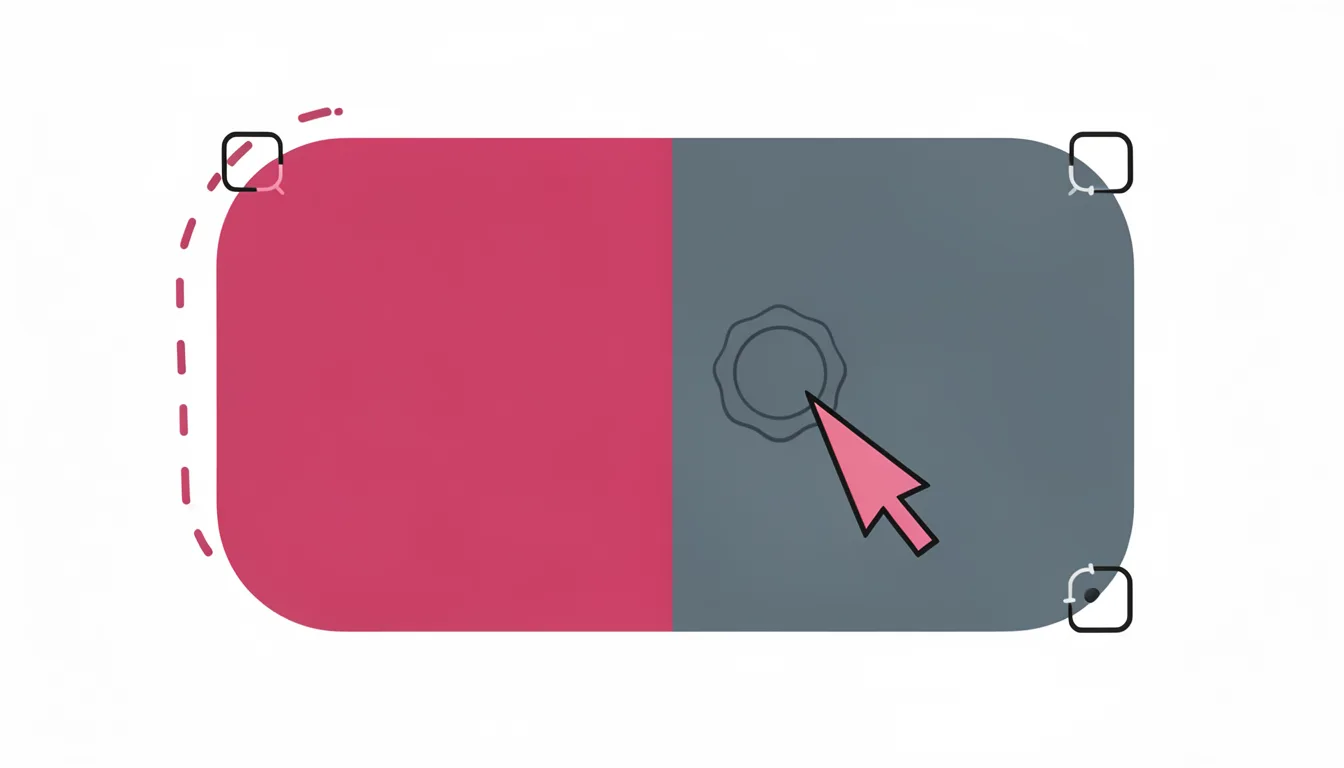
Your user is speaking, and the field already shows a sentence that looks final. That sentence may still change. A trustworthy voice input makes the transcription contract explicit: it names the mode, styles interim text, and says when the text is authoritative.
Mode is a promise, not a setting
Verbatim mode promises the words as spoken. Smart or polished mode promises a cleaner version, so it may remove filler, fix self-corrections, and normalize phrasing. For a quick note, polished text can be useful. For a legal record, customer complaint, or clinical note, the user needs to know whether the wording was edited.
Google launched Gemini 3.5 Transcribe, describing it as its most accurate speech-to-text model. The model is described as a polished voice-input model that operates while a person is speaking. It can resolve self-corrections and remove filler words such as ums and ahs. Polished output can alter the wording of what a speaker said, so it may not fit every voice-input context.
Mode changes which dependent features make sense. Gemini 3.5 Transcribe supports speaker diarization, word-level timestamps, and Smart transcription. If a user asks for exact words, a polished mode that edits self-corrections may conflict with that promise. Disable incompatible options, or explain the tradeoff before the user records. Gemini 3.5 Transcribe accepts up to one hour of audio per request, but the limit falls to 30 minutes if speaker diarization or word-level timestamps are turned on.
Interim text must look provisional
Real-time transcription is a sequence of guesses; the model may change a word after it appears. If the interface treats every interim hypothesis as settled text, users will copy, forward, or act on a version that was never final. Interim text needs a provisional look, and final text needs a clear confirmation cue.
Artificial Analysis measured a 70 percent improvement in time to final transcription for Gemini 3.5 Transcribe. The speed gain is not a guarantee of accuracy. On the FLEURS benchmark, Gemini 3.5 Transcribe achieved a 5.50 percent word error rate in streaming mode and a 5.04 percent word error rate in non-streaming use-cases.
A low word error rate still means some words will be wrong. Use the final confirmation cue to tell users when the model has stopped revising that segment. A checkmark, a border, a timestamp, or a locked state can do the job. Make the cue visible without hovering, because the user may be speaking, not staring at the screen.
The checklist is the redesign
Use this list when reviewing a voice or typed AI input feature. Each item is testable in a minute, and each one protects a different part of the trust contract.
- Label the mode. Say whether the transcript is verbatim or smart/polished, and make the choice visible before recording.
- Disable incompatible features. If polished mode edits self-corrections, do not silently offer it for exact-word uses.
- Style interim text as provisional. Use lower opacity, a dashed border, or a draft label while the model may still change it.
- Show final confirmation. When a segment is settled, give a clear visual cue that it will not be rewritten.
- State the purpose. Tell users what the text is for: a quick note, a searchable record, or a formal capture.
- State authority. Say when the transcript becomes authoritative, and whether the user can lock or export it.
- Offer a raw fallback. For high-stakes uses, provide a verbatim path or a way to see the unedited result.
- Log the contract. Record which mode was used and when the text became final, so the output can be explained later.
When the transcript may be used as evidence, the contract becomes legal as well as product. Federal Rule of Evidence 901 sets a threshold authentication requirement: the party offering an item must show enough evidence for a factfinder to accept that the item is what it is claimed to be. Duncan Levin, a former federal prosecutor and Harvard Law School lecturer, argues that AI can subtly modify or fabricate evidence. Levin argues that a witness's recognition of a voice shows only familiarity with that voice, not that the recording is an authentic capture of a real conversation rather than a synthetic simulation. A polished transcript that changes wording needs a clear audit trail. Make that trail visible in the product, not only in backend logs.